SurplusInterconnectionin Pennsylvania
Accelerating Clean Energy Deployment by Leveraging Existing Grid Infrastructure
Pennsylvania's clean energy transition faces critical interconnection bottlenecks despite ambitious goals
The Problem
Interconnection Delays
Pennsylvania has 21 GW across 694 projects in the PJM interconnection queue for Pennsylvania, with average connection timelines exceeding 5 years— over 40 months to reach interconnection agreement, plus 2+ years for construction.
Tightening Supply Conditions
Pennsylvania's electricity market faces substantial capacity challenges. PJM's 2027/28 capacity cleared at the price cap of $333/MW-day (11x increase from prior years), reflecting accelerating demand growth from data centers and electrification alongside thermal plant retirements. PJM's market monitor attributes data centers as the primary reason for rising capacity prices across the region.
New Gas Supply Challenges
New gas plants ordered today won't come online until 2030-2031 at earliest, creating a critical gap in meeting near-term capacity needs. Additionally, capital costs have surged: recent combined-cycle projects now cost $2,000/kW or more, up from $1,116-1,427/kW for 2026-2027 projects, making new gas generation increasingly expensive as a response to growing electricity demand.
Economic Opportunity Loss
Pennsylvania faces growing economic development constraints as U.S. electricity demand is projected to increase 25% by 2030 and 78% by 2050, driven by data centers, AI infrastructure, and industrial electrification. With power availability now the primary site selection factor for data centers, Pennsylvania's strategic position within PJM creates unique opportunities. However, extended interconnection timelines and tightening capacity conditions limit the state's competitiveness for these high-value investments.
The Solution: Surplus Interconnection
Surplus Interconnection for Pennsylvania
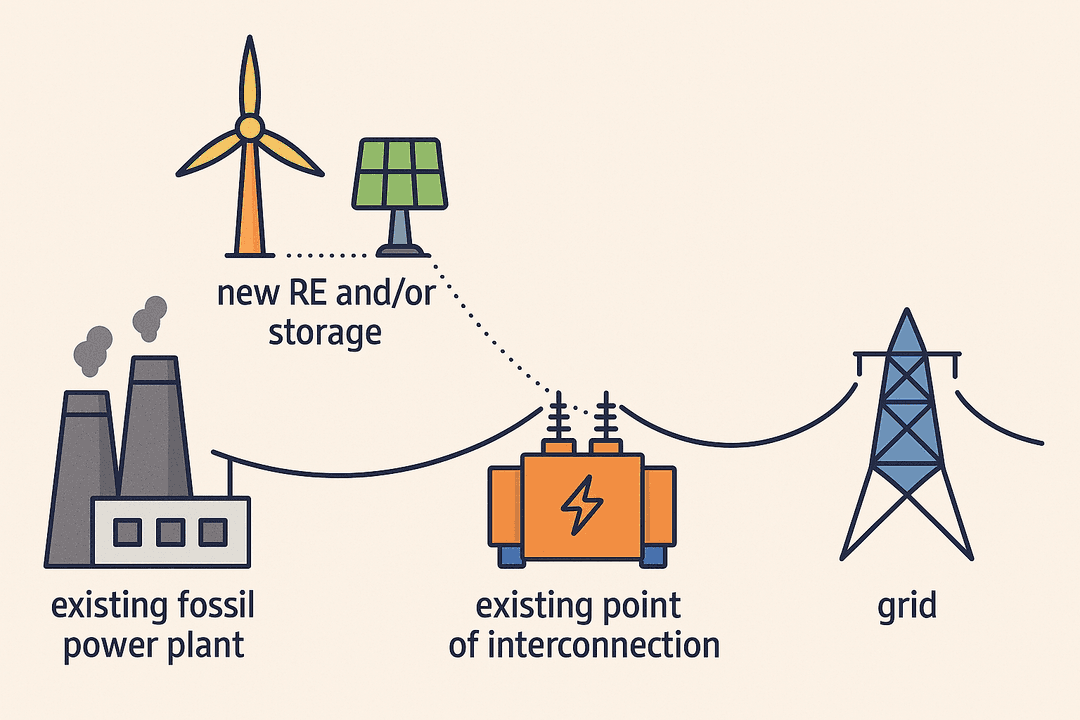
Surplus Interconnection Service allows new electricity supply resources to connect to the grid using existing infrastructure that serves already operating generators, without exceeding the total output capacity already allocated to the existing resource. FERC Order 845 (2018) cleared a regulatory pathway for generators to add new electricity resources to the grid by utilizing surplus capacity at existing interconnection points.
Key Results
Available Surplus Capacity
Pennsylvania can add 16.5 GW of clean energy capacity through surplus interconnection, including ~10 GW at thermal plants (9.5 GW solar + 0.5 GW wind) and ~4 GW at renewable plants enabled by ~2.3 GW of 6-hour battery storage—all at existing sites without new transmission.
Cost Savings
Surplus interconnection can save $1.4 billion in interconnection costs by leveraging existing infrastructure, equivalent to $256 per Pennsylvania household. This conservative estimate only accounts for interconnection savings—additional benefits from co-location and transmission utilization would increase total savings significantly.
Fast Deployment
Surplus interconnection projects can be completed in 12-18 months compared to 5+ years for standard queue projects. PJM's 2025 FERC-approved reforms streamline SIS eligibility, enabling rapid deployment when no network upgrades are triggered.
Thermal Interconnections
Pennsylvania has 34.2 GW of thermal capacity across 67 plants, with 10.5 GW operating at less than 20% capacity factor (including coal at just 19% utilization), leaving grid connections idle most of the time. Building new solar is already cheaper than operating 10.3 GW (30%) of existing thermal plants without IRA tax credits. By co-locating solar and wind at these sites, we can bypass lengthy PJM interconnection queues and deploy approximately 10 GW of clean energy using existing infrastructure.
Key Results
Abundant Local Resources
~663 GW PotentialOver 663 GW of combined solar and wind potential exists within 6 miles of Pennsylvania's thermal plants. This enormous renewable resource can enable clean energy deployment at existing interconnection points.
Urban Area Plants
0.1 GW Capacity1 thermal facility with 0.1 GW capacity is located in urban areas. We removed this plant from the surplus interconnection analysis though it is a great candidate for adding battery storage after the thermal plant gets retired.
Economic Crossover
10.3 GW TodayBuilding new solar is already cheaper than operating 10.3 GW of Pennsylvania's existing thermal plants (30% of total thermal capacity) without IRA tax credits. This makes the vast majority of thermal sites economically viable for surplus interconnection today.
Total RE Integration Potential
~10 GW by 2030Approximately 10 GW of total renewable energy (~9.5 GW solar + ~0.5 GW wind) can be economically integrated at Pennsylvania thermal plants by 2030, using existing grid connections and avoiding lengthy queue delays.
Quick Wins Available
10.5 GW Ready10.5 GW of thermal capacity operates at less than 20% capacity factor — including coal plants averaging just 19% utilization — and 39% of Pennsylvania's thermal capacity operates below 30% CF, creating immediate opportunities for surplus interconnection.
Renewable Interconnections
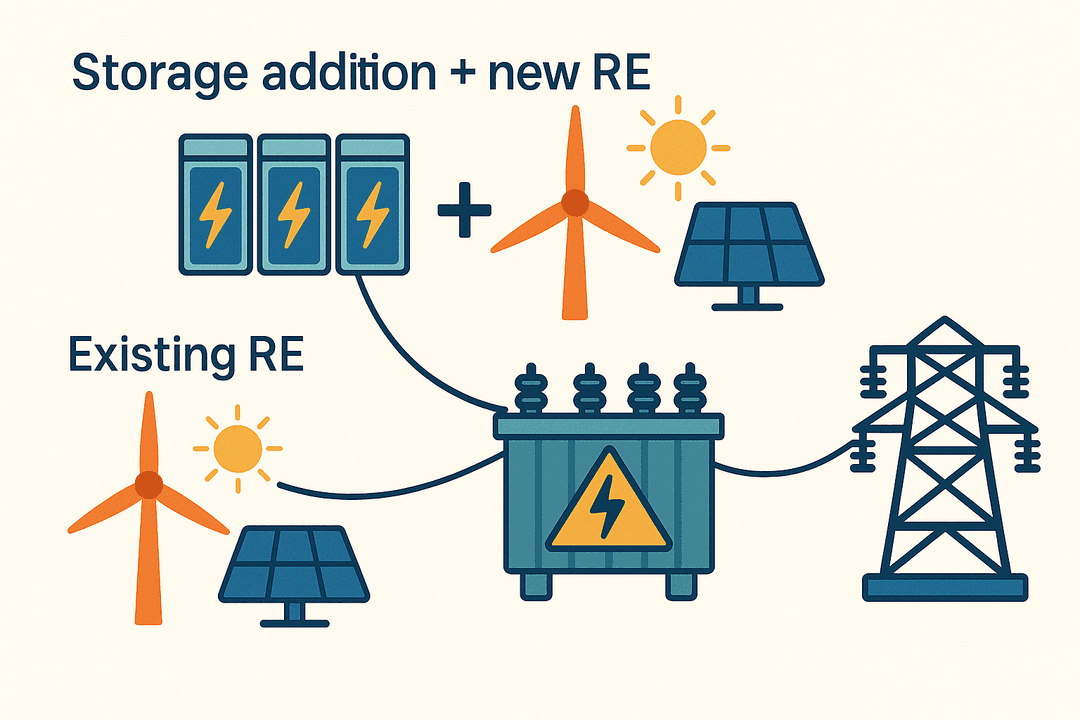
Pennsylvania's 2.3 GW of existing renewable capacity operates at low capacity factors—solar at 15.1% and wind at 23.9%—meaning interconnection capacity sits idle much of the time. Adding approximately 2.3 GW of 6-hour battery storage can enable an additional ~4.2 GW of renewable capacity and dramatically increase capacity factors to 80.2% for solar and 85.1% for wind, effectively turning variable renewables into firm power resources.
Key Results
Renewable Resource Potential
~307 GW TotalPennsylvania's existing renewable sites have approximately 307 GW of combined solar and wind resource potential within 6 miles of existing RE plants, representing enormous opportunity for expansion.
Battery Storage Integration
~2.3 GW of 6-Hour StorageAdding approximately 2.3 GW of 6-hour battery storage at Pennsylvania's solar and wind sites would deliver firm, dispatchable capacity - helping meet peak demand and enhance grid reliability.
Additional RE Capacity
~4.2 GW EnabledPennsylvania's existing renewable interconnections can support an additional ~4.2 GW of renewable capacity (2.6 GW solar + 1.6 GW wind) when paired with ~2.3 GW of 6-hour battery storage, with no new grid connections required.
Maximized Utilization
80.2% Solar | 85.1% WindDeploying storage and additional renewables at existing interconnections dramatically improves capacity factors to 80.2% for solar and 85.1% for wind plants. This transforms intermittent renewables into firm resources comparable to gas CCGT plants.